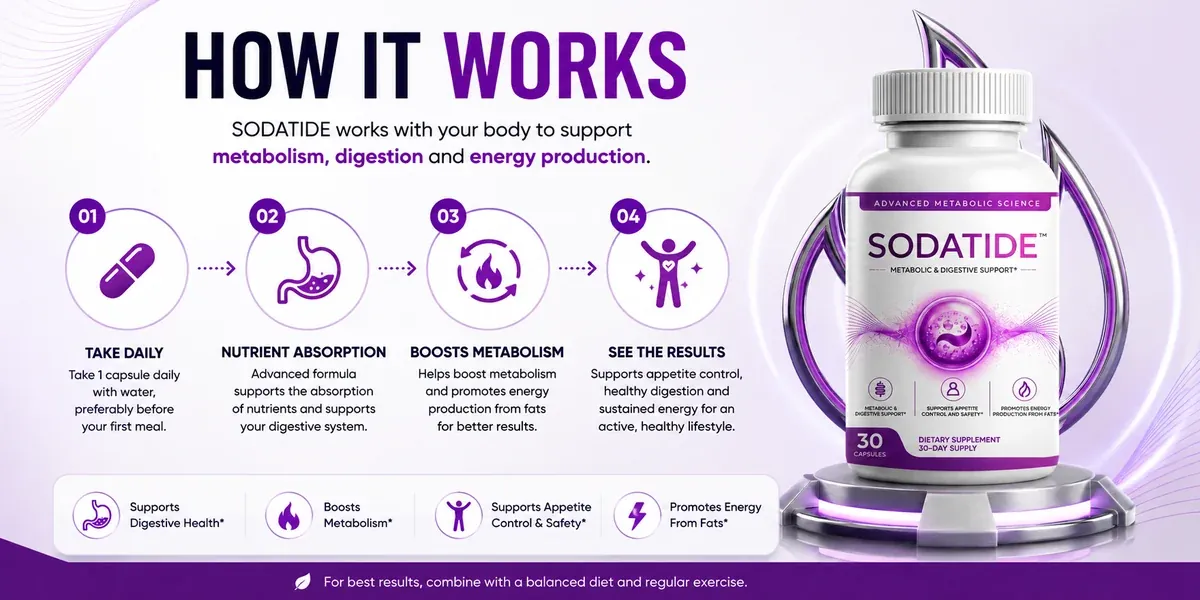
The idea behind SodaTide is simpler than it might sound: pair fiber your body can't fully digest with the specific bacteria that can ferment it. Here's that process broken into steps.
Step 1: Providing Fermentable Fiber
Chicory root inulin and potato resistant starch pass through the small intestine largely undigested. Once they reach the large intestine, resident bacteria can ferment them — this is the starting point of the entire mechanism.
Step 2: Introducing Named Microorganisms
SodaTide pairs that fiber with specific, named probiotic strains rather than leaving fermentation entirely to chance. See the full strain list on our ingredients explained article.
Step 3: Supporting Fermentation and Short-Chain Fatty Acids
When gut bacteria ferment fiber, they produce short-chain fatty acids — butyrate, acetate, and propionate. Butyrate specifically serves as a major energy source for the cells lining the colon.
Step 4: Supporting the Gut Barrier
The intestinal lining acts as a protective boundary. Akkermansia muciniphila interacts with mucin, part of the mucus layer covering that lining, which is why researchers continue studying its relationship with barrier function.
Step 5: Metabolic Signaling
The gut communicates with other parts of the body through several pathways, and short-chain fatty acids are being studied for their possible role in appetite-related signaling. This does not mean SodaTide directly burns fat or suppresses appetite.
Step 6: Daily Consistency
None of this works as a one-time event — the formula is designed around daily, consistent use alongside ordinary healthy habits like hydration and a reasonably varied diet. See what that looks like in practice in our customer reviews article.
Related Reading
← Back to SodaTide Homepage · Official Overview · Reviews · Ingredients